20 February 2022

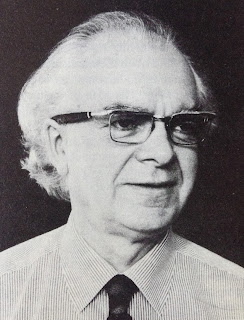
In memoriam: Peter Mitchell

 "In autumn 1992, I was invited by a microbiological journal to write an obituary piece on my illustrious colleague, Peter Michell, FRS, Nobel laureate, who had died (of cancer) somewhat prematurely that spring. I had worked with him at Glynn House for 8 years in all, (1970-73; 1983-88). They were exciting days, and an enormous privilege." Ian West

In memoriam: Peter Mitchell,
1920-1992 

(Awarded the Nobel Prize in 1978 for the discovery of the chemiosmotic proton cycle)

Peter Mitchell's recent death gives us an appropriate opportunity to reflect on a great man and a great scientist. Readers of this obituary will already know the main features of the life and scientific contributions of Peter Mitchell. They will have read the obituaries by Garland in Nature (30th April, 1992), and by Hinkle and Garlid in Trends Biochem Sci (August. 1992). They will in any case know the biography in outline; the 1961 paper in Nature, the grey books, the 1978 Nobel prize for chemistry, etc. I should like therefore to take this opportunity to note some of the more microbiological and some of the lesser known aspects of Peter's life and scientific work.  

Pre-Glynn 

After graduating in biochemistry at Cambridge in 1942, Mitchell's first scientific project was on thiol antidotes to arsenical poisons, the so-called British Anti-Lewisite or BAL, working at Cambridge under J. F. Danielli. His lasting benefits from this period seem to have been a warm appreciation of Danielli and Danielli's interest in membranes and surfaces. Danielli also introduced Mitchell to Keilin, who made a deep impression on the young man, though perhaps more emotional than intellectual. Mitchell's PhD thesis, however, dated 1950, was entitled 'Nucleic acid synthesis and the bactericidal action of penicillin', and it was then, immediately after the war, that Mitchell became, by accident (as he said), a microbiologist, working for part of the time in conjunction with the MRC Unit for Chemical Microbiology of which E. F. Gale had just become Director. He also started his long and very fruitful collaboration with Jennifer Moyle, which lasted 35 years until her retirement in 1983. 

There are a number of papers from this period which are scarcely referred to these days — papers concerning various types of phosphate compounds, glycerophosphate-protein complexes, and the 'Gram' stain. Mitchell and Moyle referred to one phosphate fraction as XSP (excess phosphate), and later positic acid (as this fraction was characteristic of Gram-positive organisms). This was eventually recognized as being the same as the soluble teichoic acid described some years later by Baddiley. Though Mitchell acquired many of the techniques of 'chemical microbiology', this was not to prove the arena of his finest contributions. He approached biology not as a chemist would, but always with the eye of an engineer; his models involved channels, articulations, balistics and pressures — mental equipment he brought from an engineering family background and a boyhood spent in his own (well-equipped) engineering workshop.  


During the next five years (1950-1955) Mitchell held the post of University Demonstrator, a position he recognized to be privileged in that he had little teaching, and tended to get involved in everyone else's problems. With the freedom allowed him in this post, Mitchell started developing his ideas on membrane structure, osmotic forces, and transport processes, ideas that we now recognize to be the foundation stones of his magnum opus.   

During these five years Jennifer Moyle was working with Malcom Dixon on pig-heart 'isocitric enzyme' (isocitrate dehydrogenase (NADP) decarboxylating, EC 1.1.42). Mitchell became very interested in one particular aspect of that work, namely the tight binding of the oxalosuccinate intermediate to the enzyme (off rate 0.012 min-1, according to Moyle). From that observation Mitchell (and Moyle) developed the concept of a microspace inside the centre of the bifunctional enzyme in which oxalosuccinate, the product of one enzyme activity (the dehydrogenase) and the substrate of the second (the decarboxylase), could accumulate and exert a thermodynamic pressure — his concept of microchemiosmosis. I was always puzzled by this; first because no-one else talked of the enzyme in this way (or even referred to Moyle's work!), but even more because this idea is at variance with the experimental fact that oxalosuccinate, though it cannot leave the enzyme, can freely bind and react. I now realize that Peter Mitchell was not using the idea to explain the enzyme but the enzyme to explain the idea, an idea which 'nature' could have used though she perhaps chose not to in this case. This predominance given to the idea was a striking characteristic of Mitchell's thinking. 

Another topic tackled by Mitchell in this period was the uptake across the bacterial membrane of phosphate and arsenate; in this field his engineering approach found more scope and his ideas seem to have been more incisively original, timely and sound. It is hard for us now to realize that at that time a large part of the microbiological community did not accept the necessary existence of a cell membrane, i.e. of an osmotic barrier at the cell surface. Mitchell's work on phosphate uptake was the first detailed study of the kinetics of transport in bacteria. His somewhat startling conclusion, however, that in resting organisms phosphate-phosphate exchange is more than a hundred times faster than either net influx or net efflux, was not taken up by others for some 30 years. Nor was it fully explained by Mitchell. He suggested that the most probable explanation was that a membrane protein became alternately phosphorylated and dephosphorylated, so that what traversed the membrane was not phosphate but phosphoryl groups. Though this model is not now believed to be correct, these experiments were undoubtedly important in the development of Mitchell's chemiosmotic thinking. There seemed here to be tight, almost perfect, coupling between two transmembrane fluxes, in this case the influx and the efflux of phosphate; but the Ussing/Widdas concept of antiport, thus dramatically exemplified, was easily extended at a later date. 

During the late 1950s the idea of covalent chemical changes being concurrent with transport took a terrible grip on Mitchell's mind. He generalized and developed what he called the concept of group translocation. While acknowledging the elegance of Monod's proposal of separate 'permease' and 'β-galactosidase' proteins, Mitchell repeatedly pointed out that a membrane-bound 'β-galactosidase' would suffice, and would allow the free energy of lactose hydrolysis to drive the accumulation of galactosyl and glucosyl units. Monod, of course, proved to be right, and Mitchell wrong; 'nature' had overlooked Mitchell's neat and simple scheme. Peter turned to glucose and discussed in several papers how glucose could enter a cell and become phosphorylated in a single co-ordinated process if the kinase enzyme were asymmetrically placed in the membrane, such that the substrate glucose entered from outside the cell, while the product exited the enzyme to the inside of the cell. The translocated group would not be glucose, but 'glucosyl'. Crane proved this to be wrong for rabbit ileum by showing that deoxy-analogues of glucose incapable of being phosphorylated could be taken up by intestinal preparations. Mitchell and Moyle also believed that succinate "probably" entered bacteria as succinyl groups (esterified to e.g. CoA) and suggested that amino acids might similarly be taken into cells by their activating enzymes. In all these examples 'nature' could be said to have let Mitchell down. But the idea of group translocation was a great idea. In the mid-1960s, Kundig, Ghosh and Roseman eventually described the bacterial phosphtransferase system in which sugars are indeed phosphorylated as they are translocated. Here is a nice example of the answer turning up before the question. 

Experimentally, what had to be done, to test the 'group-translocation' idea, was to establish reliably which enzymes were truly embedded In the membrane, and this Mitchell and Moyle set out to do. The picture that emerged was devastating for the concept of group translocation, but it was obviously crucial to the development of the richer idea of the chemiosmotic proton cycle; for the enzymes strikingly present in bacterial plasma membranes were the dehydrogenases (and ATPase). What luck that Mitchell was working on bacteria!  

The concept of the periplasm has become a commonplace, but it may not be widely known that both the word and the concept are Mitchell coinages; the result of looking at plasmolysed cells through a microscope. It is also worth remarking that the crucial experiments by which Mitchell and Moyle first showed that dinitrophenol catalyses the transfer of hydrogen ions (H+) across membranes were performed on bacteria.  

Cambridge will have many memories of Peter Mitchell. I have heard stories of a steam-filled lab, of a novel method for determining protein molecular weights, of black (protest) lab-coats. In Edinburgh, likewise, the attentive listener may hear of a slightly older Mitchell; a lively contributor to every discussion on every topic, an energetic man with a large head, a mischievous grin, and very tight trousers. It was at Edinburgh in the fifties, renovating the old manse at Carrington for his new family, that Peter acquired the taste for large-scale house-building, an enthusiasm that became perhaps the prime amongst his numerous interests. In 1963 Mitchell resigned his Readership at Edinburgh and invited Jennifer Moyle to join him in building and running a private laboratory amongst the rubble and litter of a derelict mansion in Cornwall.  

Glynn 

Cambridge and Edinburgh can only be seen as a preparation for Glynn. There, at last, the man and the scientist had scope. From that remote and isolated laboratory in its tranquil rural setting 'The Wizard of Bodmin' dazzled the scientific community for two decades with his virtuosity. It seemed he could predict and explain everything, for Mitchell's key unlocked door after door of the 'many-mansioned house'. He had conceived this time an idea that 'nature' had indeed exploited, to the full. Out of the laboratory Mitchell dazzled no less than in it. He built houses, and yacht interiors, he farmed 150 acres, managed an estate of a dozen holiday houses, sailed, minted silver pieces, copper-bottomed saucepans, and bottled and marketed spring water; and this seemed in no way to distract him from his science but to stimulate him rather, nor even to deprive him of the time to relax with his family or holiday on a Greek Island.  

The reader will have seen formal photos of Mitchell in his middle and later years. Here are two completely different glimpses that hung unobtrusively for many years at Glynn House; one of an unbuttoned Mitchell driving a tiny tractor towing his youngest son in a trailer, and another showing a white-coated Mitchell parading a prize bull at the Royal Cornwall Show. Where the Glynn drive joins the main road there swung a modest painted sign. Britton Chance once teased Mitchell that, while the sign announced the farmer to be Peter Mitchell, the picture above the name was not of himself but of a pedigree Jersey cow; but how could 'Brit' know the way things are done down there in Cornwall. Peter got much closer.  

Peter Mitchell was very competitive and relished controversy, but he was also very appreciative of the human and cultural things that enhance the quality of life, appreciative of people, of the humane; even if he occasionally found these feelings had to be subordinated. 

We thankfully remember a man who had great intellectual gifts of memory and tenacity, great creative gifts of imagination, originality and energy, and great human gifts of zest, humour, and charm.  Adieu, and thank you Peter.  

Ian C. West,  (1992)
Department of Biochemistry and Genetics, The Medical School, University of Newcastle upon Tyne, Newcastle upon Tyne NE2 4HH, UK. 
 

(This first appeared in: Molecular Microbiology (1992) 6(23), 3623-3625)

❇❇❇❇❇❇❇❇❇❇❇❇❇❇❇❇

(Comments are invited to <cawstein@gmail.com>)

05 February 2022

Sophia Lisovskaya plays Scriabin

 (Programme notes for the Morpeth Music Society concert of February 2009; prepared by Ian C. West)

Thursday, February 12th., 2009    Sophia Lisovskaya  (Piano)

"Sophia Lisovskaya is a rising star of the piano world and is sought-after for recitals internationally.  On this occasion Sophia will be playing the melodic Scriabin preludes followed by his darker études and the unique ‘Vers La Flamme’ said to have been written after the composer had a psychotic vision in which he witnessed the end of the world.  Her performance of the Scriabin in particular has been likened to that of Richter."

Partita in E minor No. 6 (BWV 830) ––––––––– J.S. Bach (1685 – 1750)

i. Toccata, ii. Allemanda, iii. Corrente, iv. Air, v. Sarabande, vi. Tempo di Gavotta, vii. Gigue
A partita (by the late 17th century) was essentially a suite of instrumental pieces in dance tempi. The 6 partitas forming Bach's Klavierübung book I were the first of his works to be published, but the last of his keyboard suites to be written. The partita in E minor (BWV 830) published in 1730, is the last of the 6 and is one of the longest, but it is based on earlier material contained in the 1725 version of Anna Magdalena Bach's Notebook. These suites, published under the general heading of 'Keyboard Exercises', are clearly offered as teaching pieces, concerning which Bach had considerable experience, and decided views. The way repeating phrases progress stepwise down the keyboard is occasionally reminiscent of a touch-typing course-book, but that does not prevent these pieces being profoundly satisfying music, exploring the gamut of human emotions. While most of the movements explore the capacity of different dance rhythms as vehicles of 'pure' music the extended Toccata is a prelude/fugue/prelude sandwich, and the Air is a lyric interlude.

Sonata in C minor, 'Pathetique' (Op. 13) –– L. van Beethoven (1770 – 1827)

i. Grave—Allegro, ii. Adagio cantabile, iii. Rondo (Allegro)
The Pathétique sonata, so named by its publisher but with Beethoven's approval, is one of Beethoven's best loved works. It was written in 1798 when the composer was 28 years old (and published the following year). Beethoven was by then established in Vienna as a piano virtuoso.
So it is an early work, showing traces of Haydn, and Mozart; and in particular Mozart's K457 keyboard sonata, which was written 15 years earlier, has the same key (C minor), has the same 3 movements, the same sombre opening chord, similar tempi and themes. However, Beethoven uses more advanced key modulations, and introduces a thematic unity between movements that is not found in Haydn or Mozart.

Preludes opus.11; Nos.1, 2, 5, 6, 8 & 9 ––– Alexander Scriabin (1872 – 1915)

Scriabin, one year older than Rachmaninov, shared the same piano tutor (Zverev) and was Rachmaninov's contemporary at the Moscow Conservatoire. In 1894 he made his debut as a concert pianist in Moscow and started to compose commercially for the publisher Belyayev. He also married. These preludes are from a set of 24 published in 1896 during what is called Scriabin's 'early period' when he was deeply influenced by Chopin; they are arranged like Chopin's in ascending order of sharps (C major, A minor, G major etc., unlike Bach's chromatic sequence). They are tuneful, open, pieces with a mere sprinkling of 9ths, 7ths and tritones which give a pleasing sharpness to the harmony; and there are few traces of atonality (e.g. in prelude 9 with the left hand in C# minor while the right is in E major).
++++++++ Interval ++++++++

Etudes op. 65 Nos. 1, 2 & 3 –––––––– Alexander Scriabin (1872 – 1915)

i. Allegro fantastico; ii. Allegretto; iii. Molto vivace
In 1903, 5 years into a professorship at the Conservatoire, Scriabin ran off to western Europe with a young admirer Tatyana Schloezer, leaving his wife and 4 children, and entered his (transitional) 'middle period'.  In 1905 he encountered the mystical philosophy of Madame Blavatsky and entered his frankly mystical 'late period'. Supported by donations, Scriabin continued to explore his music with bold originality. Conventional tonality evolved into a highly dissonant and rather rootless structure which seems to rely on theories uniting colours, scents and the meaning of the universe. Scriabin once wrote in his secret notebook "I am God", though what he meant is not clear. (Perhaps we see the ill-effects of excessive admiration on a mind inclined towards solipsism.)

Vers La Flamme op.72 –––––––– Alexander Scriabin (1872 – 1915)

It has been said of Scriabin that, "No composer has had more scorn heaped nor greater love bestowed..." While some may doubt Scriabin's sanity, no one has doubted the originality or sincerity of his musical genius. Scriabin died at the age of 43 of septicaemia, whereupon Rachmaninov set out to tour Russia giving all-Scriabin recitals. 'Vers La Flamme' (Towards the flame) was apparently intended to become Sonata 11. It is technically difficult, especially for hands as small as Scriabin's own; but it certainly aspires, and to some extent carries us, towards something transcendent.

Sonata in G minor op.22 ––––––––––– Robert Schumann (1810-1856)

i. Prestissimo, ii. Andantino, iii. Scherzo, iv. Rondo (presto-prestissimo)
Schumann's second piano sonata (Op22) was composed at much the same time as Carnaval and Études symphoniques (1834), but before Fantasiestücke (1837), Kreisleriana (1838), and Kinderszenen (1838); and before his acquaintance with Clara Wieck had ripened into love (1836). It is another minor-key work. The second movement is headed 'Getragen' (= solemn); the Scherzo 'Sehr rasch und markirt' (= very fast and marked). Schumann in manic mode.

++++++++ End of concert Feb 2009 ++++++++

27 January 2022

Against compulsory immunization

Against Compulsory Immunization

These are strange times, and politicians have felt the need to take emergency action; at times breaking established norms. They can be forgiven for making the wrong call on occasion, for, like the ship's captain at the Court-Martial, they could say: " Gentlemen, you took a year to decide that my action was wrong. I had only 2 days." But, if it becomes clear that politicians have made the wrong call, we should be allowed to say so. 

It has gradually become clear to me, during the last 2 weeks that people should not be compelled to be vaccinated.
[1]  There is some evidence that some immunizations do cause harm. The AstraZenica vaccine, which involved a modified from of an AdenoVirus vehicle,  seems to cause blod-clots at a very, very, low frequency, possibly when the injection accidentally pierces a blood vessel. And, early in the history of polio immunization, some incompletely-killed virus was injected (Cutter incident, 1955).
[2]  The belief that the right people will survive disease, if God wills it so, while probably being a misguided, even blasphemous, belief, nevertheless can be held very strongly and honestly. Allowing such a belief is akin to "Freedom of Religion".
[3] 
There are staff shortages in nursing homes and hospitals.
[4] 
It is, of course, wrong to allow carriers of live-virus to enter a hospital or nursing home where there are vulnerable people. It is right to protect the latter from infection.
[5] 
However, immunization does not completely eliminate the possibility of infection, and hence the carrying of live virus. A considerable fraction of current cases are fully vaccinated, and I know several people who have caught the infection a second time.
[6]  The presence of live virus can be detected by regular and systematic screening (for RNA, antigen and antibodies.) Such screening might be as effective as unconfirmed immunization. Perhaps even more reliable.
[6]  An irrational and 'doctrinal' faith in the efficacy of vaccines can legitimately damage credibility and trust.
[7]  The data should be allowed to speak.
[8]  It might be the case that short-staffing is as damaging to the health of patients, as the presence of well-trained, well-screened, but un-vaccinated staff. 

Just a thought!

(To comment, please email <cawstein@gmail.com>)

To subscribe [unsubscribe], please email <cawstein@gmail.com> with the word Subscribe [Unsubscribe] in the Subject line)


31 December 2021

Sentences and Sentencing

 Sentences and Sentencing

Thomas Hughes and Emma Tustin (the father and wicked stepmother of murdered 6-year old Arthur) have been handed sentences of 21 years and 29 years respectively. Those seem stiff enough. But the Right Honourable Suella Braverman, in her capacity as Attorney General, has apparently asked that the sentences be reviewed, as inadequate to the severity of their crimes. 

Another prominent court case this week is the guilty verdict on Ghislaine Maxwell for 5 crimes against under-age girls. Sentence has not yet been passed but she is said to be facing between 40 and 65 years in prison . 

        It is quite possible that the sentencing norms in the USA and the UK are radically different, and any comparison a mistake. And I am ignorant of the details of both cases and unqualified to judge the appropriateness of these sentences. But I do feel that the crimes of these two against the murdered six-year old Arthur are a great deal worse (more beastly, inhuman, unbearable) than the 5 crimes of Ghislaine Maxwell. They are enormously worse; in the way that dying is worse than having a headache. 

I feel that the very real, and decades-long pain, suffered by the girls and young women ‘befriended’ by Maxwell and ‘cuddled’ by Epstein, may be on a par with that suffered by millions upon millions of women around the world and throughout the ages; child-brides, battered-wives, arranged or loveless marriages, under-age daughters of drunken fathers. I am not belittling either pain; just trying to get things into perspective. 

Maybe there is some politics involved in the Maxwell trial. Maybe she is standing surrogate for many other cruelties that have long gone unpunished. 

        But maybe the sentencing of Hughes and Tustin also contains a political element. They may be paying for our guilt, yours and mine,  that this crime was allowed to happen in our country, our town, under our very noses. 

        However, from a restorative point of view, both sentences seem to me to be bizarre.


(To subscribe [or unsubscribe], please email <cawstein@gmail.com> with the word Subscribe [or Unsubscribe] in the Subject line)

29 November 2021

The Cough Reflex and its Rôle in Virus Transmission.


The Cough Reflex and its Rôle in Virus Transmission.

(“Coughs and sneezes spread diseases.” Old folk-saying: )

Introduction

The cough reflex involves (a) triggering, or activation of a nociceptor, (b) an afferent signal in C-fibres of the vagus nerve to the brain, (c) efferent signals to the diaphragm and other muscles, and (d) a rapid muscular contraction [1]. 

We can all distinguish between a “dry” cough (when there seems nothing in the trachea or larynx to cough up), and a “wet” or “productive” cough (when phlegm or mucus is moved up by the blast of air travelling, we are told, at ≤ 600 mph.) It is the former that I am interested in. The brain has some (but limited) ability to suppress a cough, as also do placebo drugs [1]. But those who have struggled to suppress a cough during a concert, or when sharing a bed, know that it is extremely difficult. 

It has probably occurred to many others, as it has often occurred to me, that virus-infected mucous membranes generate a cough-trigger "in order to spread the virus itself" [2]. A virus that is able to trick its host into a cough (or a sneeze) could spread infectious virions widely, and thus increase enormously its chance of finding a new host. But the possibility that the corona viruses target only ACE2 precisely because ACE2 is crucial to the cough-trigger is an hypothesis too good to pass over. Is there a link between ACE2 and the cough reflex? Of all the cell-surface proteins to which the virus could bind, why does it  choose to bind to the ACE2? And does such binding trigger a cough? If so, how.

This led me to wonder what is the cough-trigger, and what part is played by an active viral infection. Dipping into the medical and scientific literature brought up three important areas for further study: Bradykinins, Angiotensins, and ACEs.

Bradykinins, Angiotensins, and ACEs

Bradykinin is a nona-peptide (which can be referred to as Bk(1-9)), but it can come with an additional N-terminal Lys residue (here called Bk(0-9)), or lose the C-terminal Arg becoming the more active Bk(1-8) (also called des-Arg9 Bk). Active bradykinins work via two G-protein-coupled receptors called B1 (especially linked to Bk(1-8) and strongly induced during inflammation), and B2 (activated by Bk(1-9) and constitutive, hence the ‘normal’ receptor).[3]

Angiotensins [4] are another small family of peptides, unrelated to the bradykinin sequences other than in size, charge, and having amino acid residues P and F in positions 7 and 8; see Table 1 below.) Angiotensin I is an inactive decapeptide (Ang(1-10)). It is converted to active (vasoconstrictive) angiotensin II (Ang(1-8)) by the removal of the c-terminal dipeptide. [It is probably irrelevant to this story, but angiotensin II raises blood pressure, while bradykinin(1-8) lowers it.]

ACEs, Angiotensin-Converting enzymes [5], are integral-membrane-bound proteolytic enzymes capable of cutting peptide chains. There are two related proteins; ACE1 and ACE2. The former converts inactive angiotensin I (the deca-peptide) to active angiotensin II (the octa-peptide), by cutting off the C-terminal dipeptide. [It also converts angiotensin(1-9) to angiotensin(1-7).]

ACE2 has become famous since January 2020 as the unique and highly specific binding site of the SARS-CoV-2 virus. It is present in a wide range of tissue surfaces, but especially in kidney, the endothelium of the gut and blood vessels, the lungs, and in the heart. It converts angiotensin(1-10) to angiotensin(1-9) by cutting off the C-terminal Lys. But it also degrades active Bk(1-8) to inactive Bk(1-7) and other peptides [6]. [It is a quaint irony of history that ACE1 cuts off a dipeptide while ACE2 cuts off a single amino acid residue.]


Table 1 Peptide Sequences (in one-letter code, showing net charge).

Bradykinins 

Bk(1-9)   RPPGFSPFR         ++ Active, vasodilator, B2

(Bk(0-9) LRPPGFSPFR         +++ ?B2)

Bk(1-8)   RPPGFSPF + Active, pain, B1

(Bk(0-8) LRPPGFSPF ++ ?B1)

Bk(1-7)   RPPGFSP         + Inactive,


Angiotensins

AngI(1-10) NRVYIHPFHL +++ Inactive

AngII(1-8) NRVYIHPF         ++ Active vasoconstrictor

Ang(1-9)       NRVYIHPFH +++ ?

Ang(1-7)       NRVYIHP         ++ Less active, competes AngII(1-8)


Is Bk(1-8) the Cough-Trigger?

There are three bits of evidence in favour of the hypothesis that the binding of virus to ACE2 might directly trigger cough by allowing the build up of Bk(1-8). 

    (1) A distinct and well documented type of “dry cough” is observed in 15-20% of patients taking ACE inhibitors to counter their high blood pressure [1]. These block the generation of active AngII(1-8), but also block the inactivation of active Bk1-8, which consequently builds up.Though not rigorously confirmed, it is widely assumed that this raised bradykinin level causes the cough. 

    (2) Raised bradykinin levels are found in virally infected mucosae [3]. 

    (3) Cough-Hypersensitivity-Syndrome, especially common in women [1,9] and in patients from south-east Asia [1], can be induced in animal models by local application of bradykinin. 

This hypothesis requires that virus binding (and subsequent inversion into the cell) blocks the action of ACE2 in deactivating Bk(1-8) to inactive Bk(1-7). The raised levels of Bk(1-8) after infection suggests that virus does have that effect.


References

[1]  https://www.sciencedirect.com/topics/medicine-and-dentistry/cough-reflex

[2]  Morice, A.H. Chronic cough hypersensitivity syndrome. Cough 9, 14 (2013). https://doi.org/10.1186/1745-9974-9-14

[3]  https://www.sciencedirect.com/topics/neuroscience/bradykinin

[4]  https://www.sciencedirect.com/topics/neuroscience/angiotensin

[5]  https://www.ncbi.nlm.nih.gov/pmc/articles/PMC3321295/; https://www.frontiersin.org/articles/10.3389/fmed.2019.00136/full

[6]  https://www.thelancet.com/journals/ebiom/article/PIIS2352-3964(20)30282-6/fulltext; https://www.frontiersin.org/articles/10.3389/fmed.2019.00136/full

[7]  https://www.ncbi.nlm.nih.gov/pmc/articles/PMC6340691/

[8]  https://www.sciencedirect.com/topics/neuroscience/bradykinin

[9]  https://erj.ersjournals.com/content/9/8/1624


(See also my blog-posts on SARS-CoV, by putting that in the search box.)


(To subscribe [unsubscribe], please email <cawstein@gmail.com> with the word Subscribe [Unsubscribe] in the Subject line)


10 November 2021

"Committee on Standards" -- Bad Government

Corrective Weighting in Parliament?

In the House of Commons, on Wednesday afternoon 3rd. November, there were two divisions, which both went to the Tories (though some rebel Tories voted with the opposition and there were many abstentions). I refer to divisions 99 (Andrea Leadsom’s amendment regarding Owen Patterson) and 100 (On the ‘Committee on Standards’). The amendment was accepted 250:232, and the motion carried by 248 to 221. 

The Speaker of the House declared that the motion was carried, and that is how the news media reported the event. But Hansard lists the party affiliation of the members voting both for and against the motion. And the ‘Commons Library’ has a good article on Turning Votes into seats, which shows that the single Green Party MP represents 866,000 electors  while the single Alba Party MP represents only 21,000 electors. The full results of the December 2019 election are given in Table 1 below, and that information is applied in order to correctively weigh division 100 (in Table 2).

Following this train of thought it is clear that the Tory amendment and motion were defeated by a large margin; the representatives of 9.316 million electors voted for the amended motion, while the representatives of 14.433 million electors voted against the motion. 

In theory, the concept of democracy remains fundamental in British politics. In theory, it is not the army that decides our laws, nor big business, nor the newspapers, nor the Crown, nor the government, nor the Law Courts; it is the people; via their representatives in parliament. 

If there is any vestigial interest in fairly representing, in parliament, the balance of opinion in the United Kingdom, I think this method of assessing the result of parliamentary divisions, which might be called “corrective weighting”, should receive much wider recognition [1-4]. 

What is the relevance of a 248:221 governmental victory in the House, when the government suffers a 9.316 million:14.433 million defeat in the country?

Table 1


Table 2


30 September 2021

"Excluded volume" between close-packed spheres

 "Excluded volume" between close-packed spheres  

I remember reading that the 'theoretical' limit on volume density for close-packed uniform rigid spheres was circa 0.74, (so that in a bucket of marbles the volume of trapped air is 26% of the bucket volume.). Indeed, the Wikipedia article on "Sphere Packing" tells us that Johannes Kepler thought that the densest possible packing would be 0.74048 (i.e. π/(3√2)), a result confirmed by Carl Friedrich Gauss 2 centuries later. Further, that Thomas Callister Hales claimed a "proof" of Kepler's conjecture which a referee found 99% convincing. 

 I thought I ought to be able to calculate that myself, now that I have retired and have the leisure time needed for such an non-essential occupation.

+-+-+-+-+-+-+-+-+-+-+-+-+-+-+-+-+-+-+-+-+-+-+-+-+-+-

First I considered laying pennies on a flat surface, and was delighted to find that exactly six discs can be fitted round a central disc such that all are touching (Fig. 1).


Next, I considered a football (radius r) closely fitted inside a cubic container (side 2r; Fig. 2). 


The volume of the ball (Vb) is Vb = 4 π r3/3; that of the container (Vc) is Vc = (2r)3 = 8 r3. So the volume density (Vd) of the container filled by the ball is: 

    Vd = Vb/Vc  =  (4 π r3/3)/(8 r3)

∴ Vd = 4 π / 24

∴ Vd = π/6 = 0.5235987756 (when rounded up). 


I concluded that, if many spheres were aligned (touching) in straight Euclidian lines mutually perpendicular in three dimensions, the density would still be 0.5235987756 (and the excluded volume would be 47.64%, or nearly so). This array can be seen as a series of x/y planes stacked one on top of the other in the vertical (z) dimension. Each sphere touches 6 neighbouring balls; 4 in the same plane, plus 1 above, and 1 below. But they can clearly be packed more tightly. 

So I constructed a single plane as follows. First I laid a file of spheres in the x dimension. Then a second file of spheres, but those of the second file do not coincide with those of the first file, but are offset to the right by r, while those of the third file are offset to the left by r (and thus coincide with the first file).  Clearly the centre of a sphere in the second file is equidistant from two spheres in the first file. Indeed, they form an equilateral triangle, side 2r (Fig. 3). 


Drawing a perpendicular (length m in units of r) from the apex to the base, we can use Pythagoras's theorem to calculate m (See Fig. 4 below).

    m2 + r2 = (2r)2 

∴ m2 = (4-1)r2

∴ m = 1.73205081 x r


It is clear that a single layer of this array is more compact than the first array by the factor m/2 (=0.8669254); or more "volume dense" by the factor 2/m (= 1.154700536759). It would be the same if we stacked many layers of the 60°-offset array, such that each sphere touches 6 neighbours in the plane, with one above and one below.

∴ Vd of Loose 3d array = 0.5235987756

∴ Vd of semi-compact 60º-offset array =0.5235987756/0.8669254 = 0.6045997881

But there is more compacting we could do.

Looking down on our single layer of the 60°-offset array (i.e. the marbles in Fig. 3 above), we see that there is a dip formed by 3 contiguous spheres where a sphere of the next layer should lie, touching all three spheres in the lower layer. We can see that there will form a triangular pyramid where every straight line between the apices is of length 2r; indeed a 'regular tetrahedron'. But how high (in the z dimension) is the upper sphere above the 3 lower spheres?

The apex of a vertical equilateral triangle drops a perpendicular of length m to its base, as we calculated above:

m2 + r2 = (2r)2 

∴ m2 = (4-1)r2

∴ m = 1.73205081 x r

But this equilateral triangle is leaning inwards to form one face of the pyramid. The perpendicular line (length p), from the apex to the point on the base equidistant from the three sphere-centres (point e), can be found in the same way; but this was (for me) the most difficult step. I kept getting the wrong answer. It was only after  3½ days that I solved the puzzle. The right triangle we have to solve has hypotenuse 1.73205081 (length in units of r), while the base is not r but Tan(30°) = 0.577350 (in units of r). 

To see this look at the equilateral triangle that forms the base of the pyramid. There is a point (a) midway along one side (so r from either end). A line can be drawn across the triangle to the opposite point. That can be repeated for the other sides. These lines intersect at the point we called e, cutting each line into a shorter and a longer portion. The shorter portion is Tan(30°) while the whole line is Tan(60°). By Pythagoras's theorem:

p2 + (Tan(30°))2 = (1.73205081)2 

∴ p2 =  (1.73205081)2 - (0.577350)2

∴ p = 1.63293936 x r  

If our layers are extended infinitely in the x and y dimensions this compaction in the z dimension will affect the overall volume density of the array:

∴ Vd of compact array = 0.6045997881 x 2/1.63293936 = 0.74048049


Q.E.D.


(To subscribe [or unsubscribe], please email <cawstein@gmail.com> with the word Subscribe [or Unsubscribe] in the Subject line.)